
Key Takeaways:
- AI revolutionizes search: Google AI Overviews and AI search engines fundamentally change how users search for and consume information.
- Click-through rates decline: AI Overviews reduce organic clicks on the top result by an average of 34.5%.
- Impressions increase: On one hand, people search more. On the other hand, Google AI Overviews enable additional impressions.
- Brand building becomes more important: Websites with strong brand signals and presence on various platforms are more resistant to Google updates.
- SEO becomes more holistic: Successful search engine optimization in 2026 requires integration of editorial, IT, UX, PR, and product management.
-
 Last updated: 10. February 2026Understanding Google AI Mode: Overview & Functions
 -
 Last updated: 6. February 2026Google AI Overviews: What’s Changing for SEO & SEA in 2025
 -
 Last updated: 12. February 2026Answer Engine Optimization (AEO): AI visibility in 2026
SEO Trend #1: AI Search Systems Like ChatGPT, Bing Copilot, and Perplexity Are Taking Market Share from Google
AI-powered search systems are becoming increasingly important but still lag far behind Google. According to a SparkToro-survey, Google processes 14 billion search queries daily, while ChatGPT only reaches 37.5 million—a ratio of 373:1 in Google’s favor.
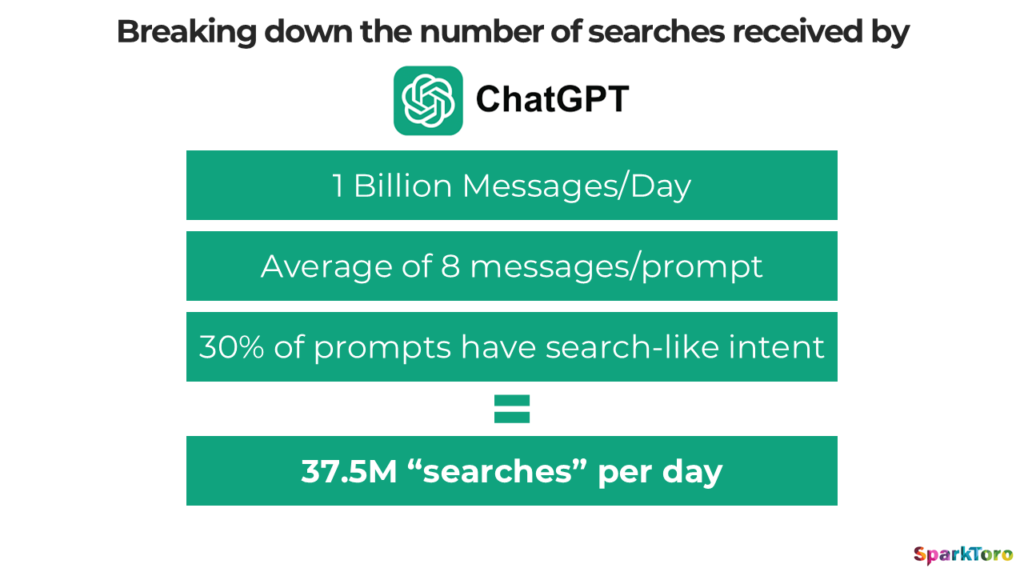
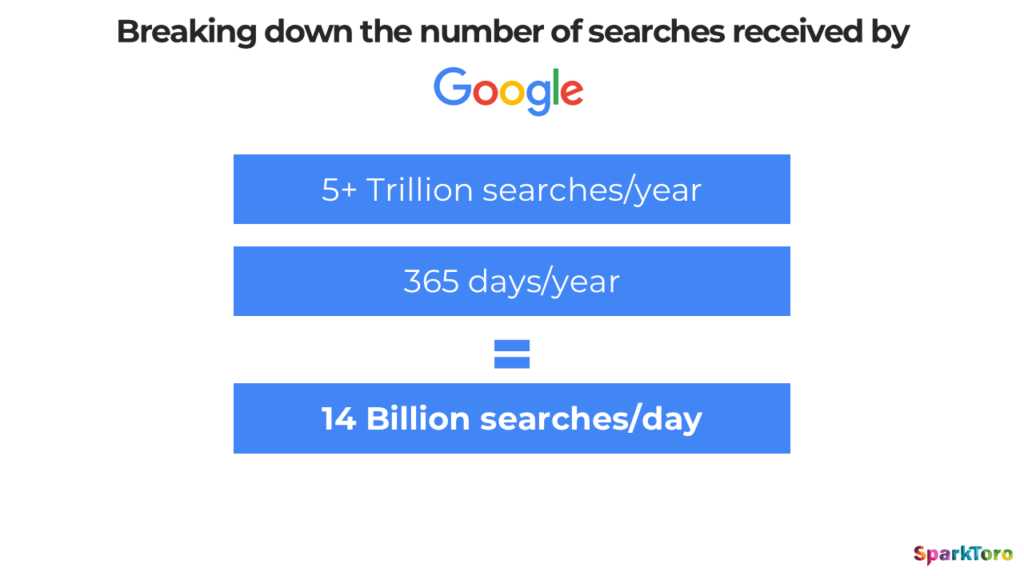
Nevertheless, a clear trend is emerging:
Users are increasingly turning to ChatGPT, Bing Copilot, and Perplexity for certain queries.
The main reason lies in the efficiency of these systems. AI searches deliver direct, synthesized answers instead of a list of links. For complex questions or research, they offer a clear advantage:
They summarize information from various sources and present it in a coherent answer. And in a dialogue.
- Conversational interactions: Users can ask questions in natural language and receive contextual answers
- Direct answers: Instead of having to browse multiple websites, users immediately get synthesized information
- Multifunctional capabilities: Many AI systems can simultaneously write text, create code, and analyze data
For SEO professionals, this trend means: You must not only optimize for Google’s 10 blue links but also understand how your content is interpreted and cited by AI systems. Optimization for these systems is called Generative Engine Optimization (GEO) or Large Language Model Optimization (LLMO).
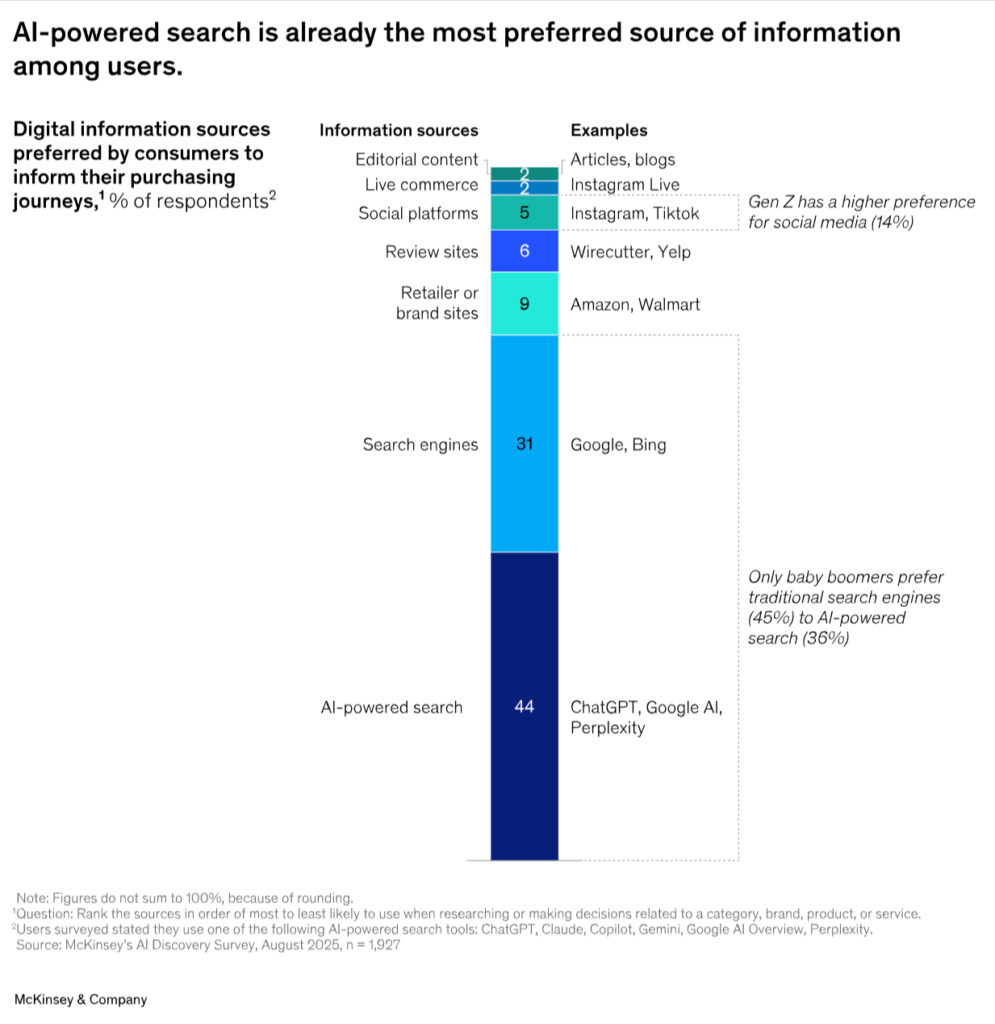
McKinsey’s numbers clearly show that diversifying your search strategy beyond Google is becoming essential:
SEO Trend #2: More and More Search Queries Show a Google AI Overview
Google AI Overviews fundamentally change search result pages. These AI-generated summaries appear in about 4.5-12.5% (depending on the study) of all search queries and summarize information from various sources. They’re particularly common in informational search queries.
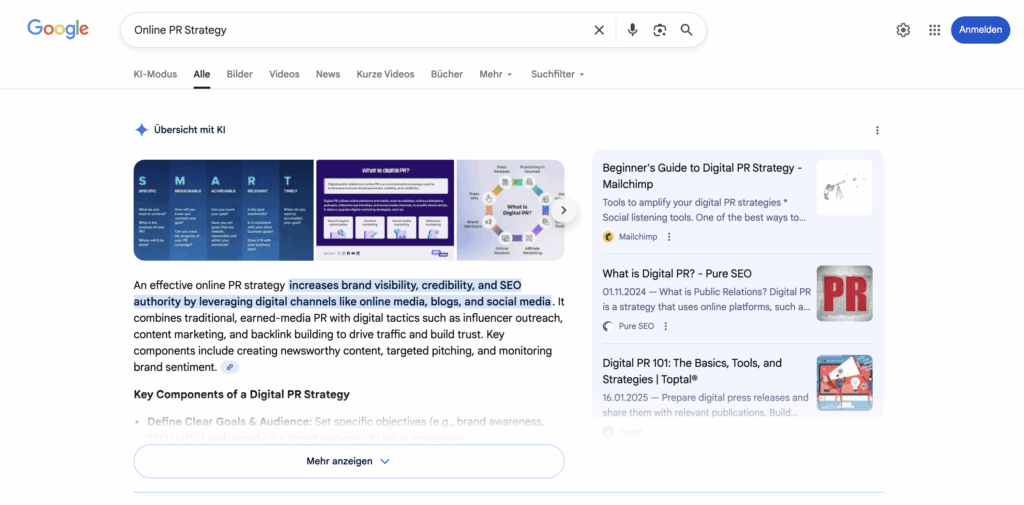
The effects on click behavior are significant. Studies show a decline in organic click-through rate when an AI Overview is displayed. According to Ahrefs, the average click-through rate on position 1 is 34.5% lower due to an AI Overview.
According to current Seer Interactive data, organic CTR in this case even drops from 1.41% to 0.64% year-over-year. For search ads, CTR also drops from 21.27% to 9.87%.
Interestingly, according to Seer Interactive, AI Overviews appear particularly frequently in search queries that already had a high rate of zero-click searches previously.
In information-driven industries like health, AI Overviews are shown in up to 82.5% of search queries according to SE Ranking, while in commercial areas such as e-commerce and retail, it’s only about 2%.
Google began rolling out AI Overviews in European countries on March 26, 2025, including Germany, Switzerland, Austria, Italy, and Spain. This development makes it essential for companies in the DACH region to adapt their content strategy to generative search systems.
SEO Trend #3: AI Mode Makes Google Search ChatGPT-like
Google AI Mode goes a step further than AI Overviews. This separate search function uses Google’s most powerful AI model, Gemini 2.5, to answer complex questions and conduct in-depth research in a ChatGPT-like environment.
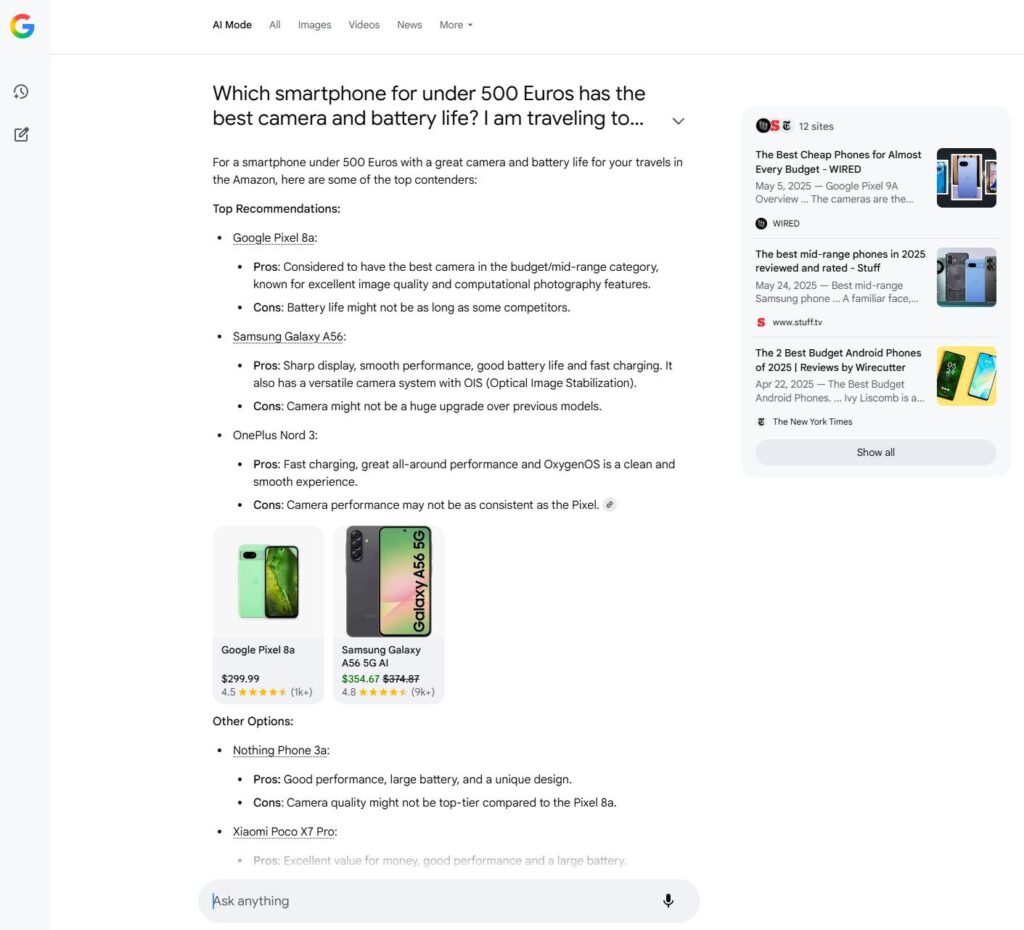
Since May 2025, Google AI Mode has been available to all US users. Since October 7, 2025, Google AI Mode can also be used in Germany, Austria, and Switzerland.
The core function of AI Mode is the “Query Fan-out” technique:
Instead of a single search, Google simultaneously conducts dozens of sub-searches, analyzes the results, and summarizes them into a comprehensive answer. According to Google CEO Sundar Pichai, search queries in AI Mode are on average 2-3 times longer than traditional Google searches.
Particularly revolutionary are the agentic functions of AI Mode. It can actively take over tasks for the user, such as comparing ticket offers, suggesting restaurant reservations, or coordinating appointments. Google works with partners like Ticketmaster, StubHub, and Resy for this.
AI Mode also offers extensive personalization options. With user permission, it can access personal data from the Google account to deliver tailored answers. For example, it can consider appointments from the calendar or recognize travel plans from Gmail confirmations.
Want to learn what the future of search looks like? In this guide to AI Mode, you’ll learn the strategic implications.
SEO Trend #4: Generative Engine Optimization Becomes a Central Topic
Generative Engine Optimization (GEO) – sometimes also called Answer Engine Optimization (AEO), Large Language Model Optimization (LLMO) or Generative Artificial Intelligenze Optimization (GAIO) – is developing into the new standard in search engine optimization. This discipline focuses on designing content so it can be understood, extracted, and cited by AI systems.
Traditional SEO optimization is no longer sufficient to remain visible in an AI-dominated search landscape. For a successful GEO strategy, the following elements are crucial:
- Structured content: AI systems prefer clearly structured information with logical headings and paragraphs
- Precise, context-rich answers: Direct, concise answers to specific questions are preferentially cited
- Unique information: Only information outside training data is cited (see Claude-Leak)
- E-E-A-T-signals: Experience, Expertise, Authoritativeness, and Trustworthiness remain important quality factors for AI systems too
- Semantic depth: Content should be thematically comprehensive and cover related sub-questions
Rand Fishkin, founder of SparkToro, emphasizes:
“It’s not about inventing a new name for SEO, but understanding that we must optimize everywhere people search for information—whether in Google, ChatGPT, or Reddit.”
Optimization for AI systems requires rethinking content creation. Instead of focusing on keyword density, you should concentrate on thematic relevance, factual accuracy, Information Gain, and clear structures. Content classified by AI systems as trustworthy and informative has better chances of being prominently placed in search results and AI answers.
In this video, we dive into concrete strategies for appearing in AI search along the customer journey:
SEO Trend #5: Search Engines Reward User Generated Content (UGC) Because People Still Want to Read from People
In a world of AI-generated content, users increasingly seek authentic human voices.
This development is reflected in search results:
Platforms like Reddit and Quora are experiencing explosive growth in organic traffic. Reddit has experienced a 603.41% increase since June 2023, while Quora has grown by 379.33%.
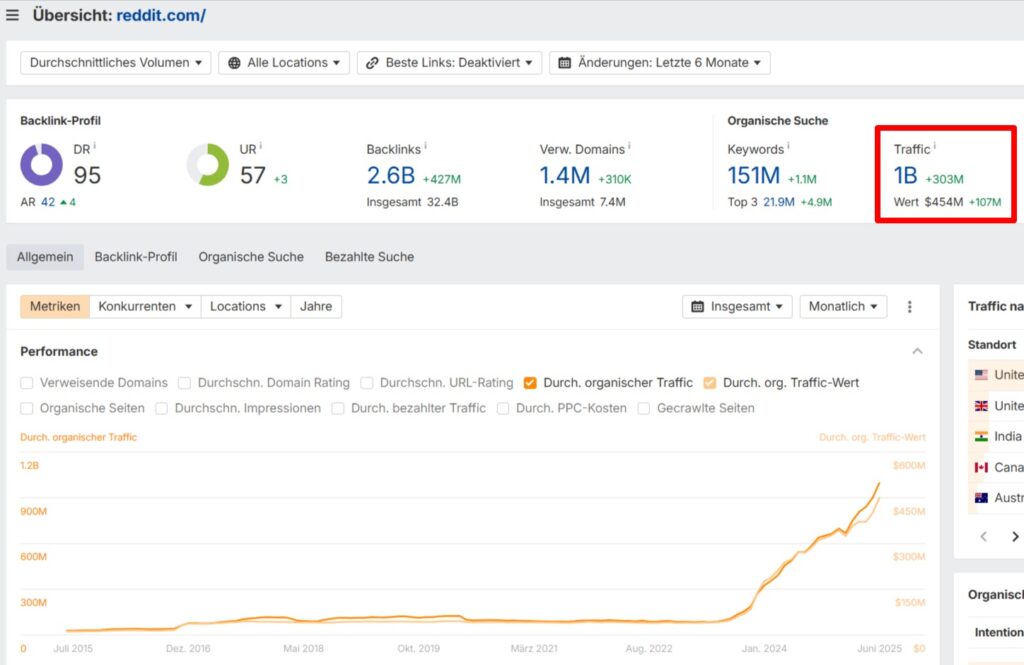
Search engines recognize that users value real experiences and personal insights. This leads to an upgrade of User Generated Content (UGC) in search algorithms. Projections show that UGC could constitute a large portion of SEO-relevant content in B2C.
For companies, this trend offers several starting points. You can establish your own forums or discussion platforms, be active on UGC platforms, incorporate authentic user opinions into your content, and motivate customers to share their experiences.
Even large brands like ChatGPT now use Reddit as part of their SEO strategy. The official ChatGPT subreddit generates about 480,000 organic visits monthly—a clear sign of the growing importance of community platforms.
SEO Trend #6: AI Tools Transform Existing SEO and Content Workflows
The integration of AI into marketing workflows is no longer a vision of the future but reality. According to 023 surveys (!!!), 86% of SEO professionals already use AI tools in their daily work. Among companies with more than 200 employees, 83% report measurable improvements in their SEO performance through AI use.
The efficiency gain is impressive: SEO experts save an average of 12.5 hours per week through AI support. This time can be invested in strategic tasks while repetitive activities run automatically.
I would say we’re now much, much further along. Through our custom-developed content workflows, we can cover a client’s complete keyword set within a few months. The content is on-brand and based on the company’s internal knowledge, not generic ChatGPT outputs.
AI tools today take over various tasks. They identify relevant search terms and topic clusters, generate text drafts and structure suggestions, recognize market trends and competitor strategies, identify website problems, and evaluate ranking data automatically.
Important to understand:
AI doesn’t replace experts but scales their capabilities. The human component—strategic thinking, creativity, and context-based decisions—remains indispensable. The future belongs to hybrid teams of human experts and AI co-pilots.
Nevertheless:
“In an AI world, everyone must become a strategist. AI shifts the rules of the game: The era of taskers is over—what’s needed are people who think, decide, and take responsibility.” – From Evergreen Media’s AI Principles
The key to success lies in the right balance: AI for efficiency and scaling, human expertise for quality and differentiation.
In this video, we talk about AI-agents and workflows:
SEO Trend #7: SEO Must Be Thought Bigger
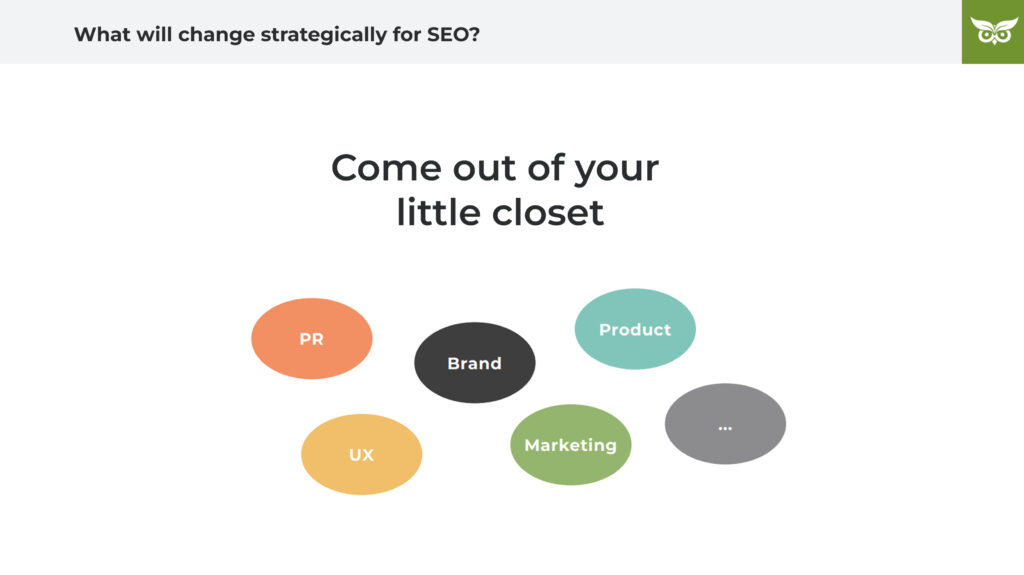
The traditional separation of SEO as a standalone discipline is increasingly dissolving, as I already addressed in my presentation at CAMPIXX 2024. Successful search engine optimization in 2026 and beyond requires an integrated interplay of various company areas. SEO becomes a holistic strategy that goes beyond Google.
This development is reflected in the reorientation of SEO teams. Instead of working in isolation, SEO professionals must cooperate closely with other departments:
- Editorial: Joint content strategies that meet both journalistic standards and SEO requirements
- IT/Development: Technical optimization, structured data, Core Web Vitals
- UX Design: User-friendliness and conversion optimization
- PR: Building brand authority and backlink acquisition
- Product Management: Integration of SEO into product development and communication
The E-E-A-T factors (Experience, Expertise, Authoritativeness, Trustworthiness) continue to gain importance and require cross-departmental collaboration. Google and other search systems increasingly evaluate the overall quality of a brand, not just individual SEO signals.
Excellent SEO in 2026 no longer optimizes just for individual search queries but orchestrates the entire user experience along a three-dimensionally mapped customer journey – cross-channel, platform-aware, and thought far beyond Google.
Particularly important is the connection between SEO and brand building. As I’ve mentioned many times on our YouTube channel, Google updates primarily affect websites with a lot of organic traffic but a relatively weak brand. An extensive digital footprint signals to Google that it’s a relevant brand.
AI changes the rules – not just for SEO, but for entire strategic brand management. When AI systems become the first point of contact for information search, a new playing field emerges.
For you as CMO or team lead, this means:
- Traditional SEO KPIs like rankings or visibility indices lose significance
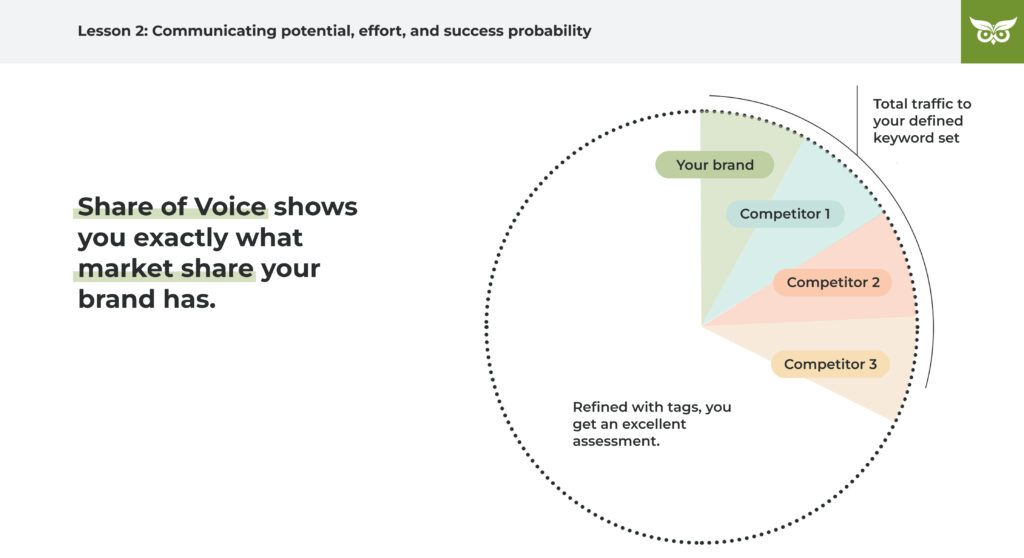
- Share of Voice in AI systems becomes a strategic early indicator of brand strength
- Your content strategy must integrate more strongly with platforms like Reddit, LinkedIn, or industry-specific forums – where LLMs get their knowledge
Visibility thus becomes a leadership task. Those who set the right course now secure market shares.
What You Can Do Now to Dominate 2026
In a radically changing search landscape, it’s no longer enough to optimize existing tactics. It’s about entrepreneurial course-setting – strategic, structural, and cultural. Those who want to remain visible in 2025 and beyond must act now.
1. Six-Month Roadmap with C-Level Buy-in
Set a clear timeframe for the strategic realignment of your search presence.
This roadmap is not an SEO project you can delegate to the content team. It’s a strategic lever with which you shape your brand’s future visibility – across all platforms. Those who want to be findable must invest: in Topical Authority, in platform presence, in citable content.
Develop a roadmap that maps both quick wins and structural transformations:
- Analyze visibility: How often are you cited in AI Overviews or AI search systems – and with what content?
- Identify strengths: Where is your brand already trustworthy, citable, present today?
- Close gaps: Which strategic topics, formats, workflows, or platforms are missing—and which content must be specifically revised?
- Define measurement points: Build new KPIs that go beyond traditional rankings—e.g., Topical Authority or AI visibility along the customer journey
Important: The roadmap must be supported by C-level. SEO is no longer a siloed topic—it affects overall strategy.
2. Allocate Resources Strategically
At the center of the next SEO generation is no longer mass (visibility indices, traffic, etc.) but impact. Distribute your resources more strategically:
- Content audit & refresh instead of weekly production obligation
- Investments in brand authority (PR, thought leadership, platform presence)
- Technology budget for AI-supported workflows (research, scoring, editorial planning)
- Strengthen collaboration between departments – SEO must be considered in editorial, UX, PR, and product development
The goal: a system that is visible, resilient, and future-proof—not just a to-do list for the content team.
3. Build Competencies Systematically
A strong SEO strategy needs people who think in systems – not just in keywords. Therefore:
- Equip your teams for GEO: Understanding of AI citation logic, content structuring, and Information Gain
- Create interface competence: Content marketers who understand SEO; SEOs who think UX; analysts who interpret strategically
- Promote strategic judgment: Which content will survive? Which formats are future-relevant? Which platforms worthwhile?
Teams that understand where the journey is headed can better decide where the opportunities lie and how to exploit the potential.
4. Use External Expertise Strategically
The change is complex – and uncertainty is high. Internal teams alone cannot cover all facets: technology, content, brand strategy, platform logic, organizational development.
The future doesn’t belong to those who cling to old SEO tactics and cry about AI Overviews, but to those who understand the bigger picture and adapt flexibly.
Let’s develop your SEO strategy for 2026 and beyond together.
What Comes Next – A Brief Look at 2027
Those who set the right course today secure advantages not just for 2026—but prepare for the next wave. Here are two developments we already see on the horizon:
- AI agents as target audience: Content is increasingly processed by assistance systems—not just for users, but for tools that prepare decisions or trigger automated actions.
- Platformization of search: Google, ChatGPT & Co. continue developing into operating systems of digital life. SEO must work cross-channel—not just on websites, but also on apps, community platforms, and in structured feeds.




Comment